AI in Audit Is a Trust Problem, Not a Speed Problem
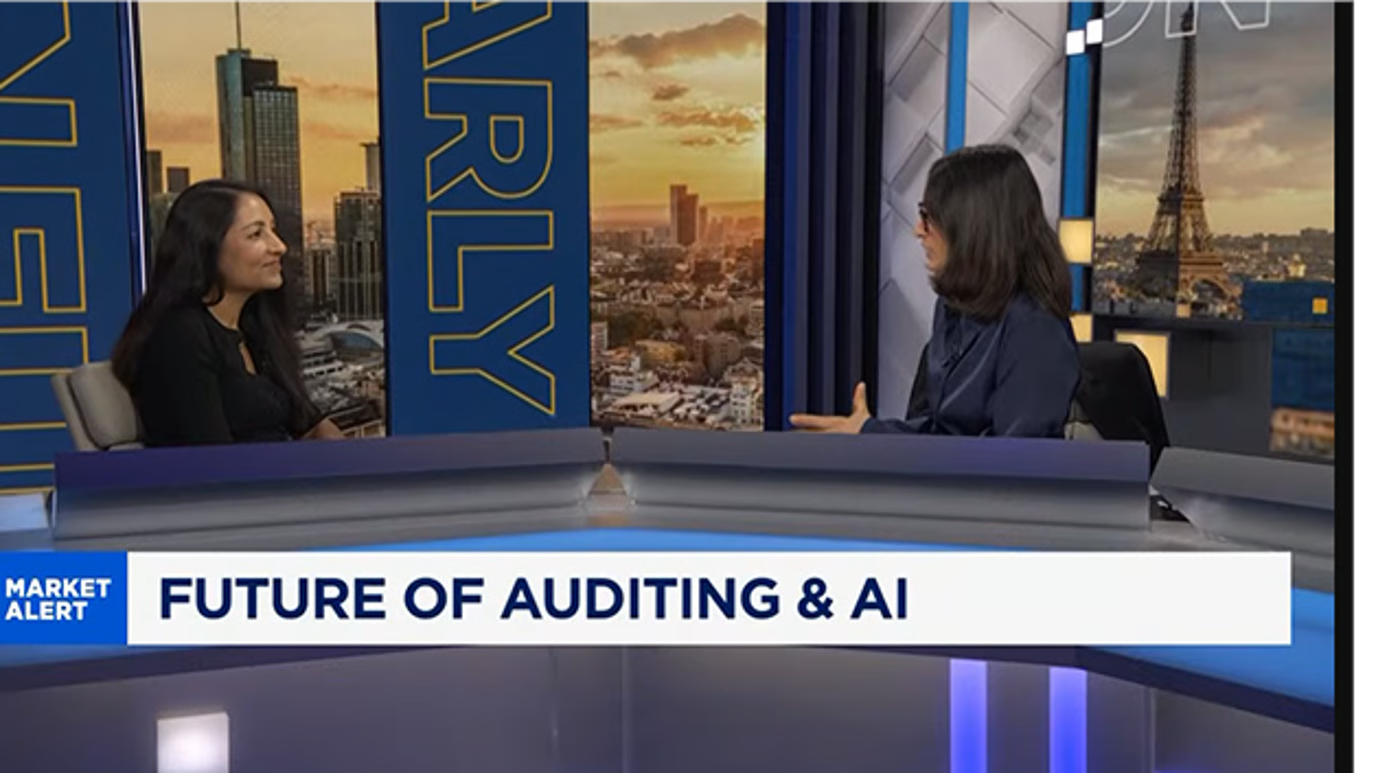
Here are the three things worth knowing.
In audit, AI is a trust problem, not a speed problem
Speed is not the point
"It's not just about how quickly you get the job done, but it's about how much you can defend the job that you've done with AI. You will be fined by regulatory organizations if you can't defend every line in your audit."
That's the part of the AI conversation most vendors skip. Audit isn't a sector where being fast earns you credit. It's a sector where being wrong earns you consequences. Peters said that reality is what shaped how DataSnipper built its agentic products, from the ground up around traceability, not throughput.
Why explainable reasoning matters in audit
"A lot of companies today operate in a black box with AI - you put in a prompt, you get back an answer. But the question is: what did the AI do? What did the human do? Where was judgment applied?"
Those are the questions regulators will ask. And they're the questions Peters said DataSnipper built its platform to answer. Every number, down to every decimal point, needs to trace back to evidence. That's not a nice-to-have in audit. It's the baseline.
This is where audit-specific AI diverges from general-purpose tools. Ask a horizontal assistant like Claude or Copilot to test a population and it will return an answer, confidently, but with no record of which documents it read, which rows it sampled, or where a human applied judgment. Vertical AI built for audit works the other way round: every agent step stays bound to the source evidence in the workbook, so the reasoning is visible and reviewable line by line. In a profession where the deliverable isn't the number but your ability to defend the number, explainable reasoning isn't a feature. It's the entry requirement.
Data residency as a non-negotiable
Peters also flagged something that rarely comes up in AI product conversations: where the data lives. DataSnipper is the only audit platform with AI residency in the U.S., Europe and Asia Pacific. For firms handling client financials across borders, that's a material consideration, not a marketing footnote.
75% of audit leaders support AI. Only 13% actually use it.
The gap is real and it's wide
"75% of audit leadership is very supportive of using AI. However, only 13% of workflows have AI embedded in them."
That's not a rounding error. It's a structural problem. Leadership enthusiasm for AI is not translating into actual workflow change, and Peters has a name for what's getting in the way.
The blank page problem
"They're struggling with what I like to call the blank page problem - they want to use AI, but they're not sure how to."
Most audit teams know they should be doing something with AI. They've seen the demos, sat through the briefings, approved the budget line. But when it comes to starting, there's nothing there. No entry point. No template. No obvious first step.
Pre-built agents as the on-ramp
DataSnipper customers have built thousands of their own agentic workflows on top of those templates.
AI won't replace auditors. It's already promoting them.
"I'm an optimist. I believe they get promoted - instead of starting as an entry-level data cruncher, you're starting as an entry-level manager. But you're not managing humans, you're managing agents."
She backed that up with three reasons audit specifically won't automate its way out of needing people. First, it's a regulated industry. No AI provider is going to be called before the SEC to stand behind an audit. Second, the work involves sustained judgment across complex, ambiguous situations, what Peters called "navigating an ocean of gray." Third, auditors develop a deep understanding of clients through ongoing relationships, and that understanding is what feeds good AI inputs in the first place.
The talent crisis predates AI
Peters pushed back on the idea that AI is the threat to headcount. She pointed out that audit was already losing people before AI entered the picture.
"We see fewer people joining the profession and more people leaving because they're exhausted from burnout. This predates AI. AI is a huge boon because it's helping a talent-starved industry do more with less."
That's a significant reframe. The question isn't whether AI will shrink the audit workforce. The workforce is already shrinking - through attrition, burnout and declining enrollment in accounting programs. AI is arriving into a supply problem, not creating one.